CHAPTER IV
To purchase this peace the soul must renounce all other comforts
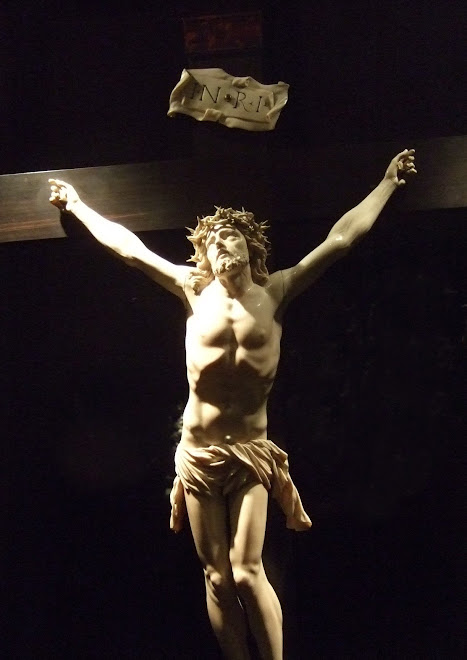
That this important foundation of humility may be solidly and durably laid, you must endeavor to embrace with open arms and sisterly affection all tribulations, desiring to be condemned and vilified by all the world, and to have no comforter but only God. The judgement and maxim which must take firm root and absolute possession of your soul is this: That God alone is all your joy and welfare; all things else to you no other than thorns and briers. Accustom your soul to entertain itself with God. Think, if you were being borne along to receive some affront or confusion, with what content and alacrity you would go suffering with joy in his presence and for his love, valuing and seeking no other honour whatsoever, but to suffer for him and his glory. When any reprehension, injury, or contempt befalls you, cherish it as a hidden and an unknown treasure, as a purifying expiation for all your former transgressions. Desire not in this life the affection or esteem of any creature. Let nobody make any account of you, or so much as take notice that there is such a person in existence as yourself, but as the greatest of kindnesses leave you to suffer with Christ crucified. And above all, defend yourself against your self as against the worst of enemies; never follow your own will, judgement, or inclination, unless you willfully seek your own ruin; and when your affection or inclination leads you to anything, though it be ever so holy, represent it purely, with profound humility, in the sight of God, beseeching him to bring to pass his own holy will in it as he sees good, and this with sincerity and with fervor of heart, without any mixture of self-love, knowing that of yourself you are nothing, have nothing, nor can secure yourself against those desires and judgements which have the appearance of sanctity, peace, and indiscreet zeal, of which our Lord saith: Beware of false prophets, which come to you in the clothing of sheep, but are in reality ravening wolves; by their fruits shall you know them. (Matt. vii 15) The fruit of such temptation is to leave in the soul disquiet and dissatisfaction. Whatsoever withdraws from humility, from internal peace and tranquility, be the pretext never so specious, is a false prophet and a ravenous wolf, which, under the cover of the sheep’s skin, comes to deprive you of the virtues most essential to your advancement, and in a moment devour what with much time and industry you have amassed. By how much more appearance of sanctity the thing hath, so much the more strictly doth it require to be examined, but still without violation of your interior peace and tranquility, as hath been said. And if at any time you fail in these directions, trouble not, but rather humble yourself before our Lord, acknowledging your own weakness, and take heed for the future; perhaps it was permitted to abase and quell some secret pride which you were not aware of. And if, moreover, the sparks of extinct vices or concupiscences revive now and then and threaten your soul, be not dismayed, but redouble your watch, and gently withdraw your spirits and settle them in peace, neither afflicting yourself, nor rejoicing, nor growing angry, but preserving your soul pure and calm for the operation of God, whom you will certainly find within your own breast, and be by him convinced that the divine aim is always at your good and profit, though you have never so much difficulty to apprehend it in the aforesaid cases.
Sunday, July 31, 2011
Saturday, July 30, 2011
How by little and little we are to build this habitation of peace
CHAPTER III
How by little and little we are to build this habitation of peace
Have a care never to permit your heart to become sad, concerned, or solicitous for whatsoever happens; but let your whole endeavor be to keep and preserve this peace, since our Lord tells us, Blessed are the peaceful. (Matt. v 9) Thus doing, he will come and build himself a City of Peace in your soul, a house of delights. He requires no more on your part but that as often as your senses mutiny you hasten to repress and quiet them, still all your powers, movements, thoughts, and actions. But as a city is not built in one day, so neither in one day ought you to pretend to this internal peace, it being no less than to build a house for God and a temple for his Holy Spirit, although, indeed, he be the principle Architect, and without him all your labour were in vain. Now the corner-stone and chief foundation stone of this structure is Humility.


Thursday, July 28, 2011
Of the care the soul must take to pacify itself
CHAPTER II
Of the care the soul must take to pacify itself
Place, then, above and before all things, this peaceful watch upon your senses, and without any violence, yea, on the contrary, with much serenity and security, and it will carry you on to great achievements. With this peace, sent by God, you will be able to watch, pray, obey, and suffer all injuries without difficulty or the least repining; and though, till you arrive at this, for want of experience, you may encounter hardships enough, yet shall your soul find much consolation withal, and every day gain new advantages and acquire new skill to make a better defense in the future. If at any time you are in more than ordinary distress, so that this peace seems to have fled from you, have immediate recourse to prayer, and persevere there in imitation of Christ our Redeemer, who to give us an example prayed thrice in the garden to his Eternal Father, that we might not go about seeking any other remedy, or cease making use of this one till we find our wills entirely pacified and conformed to the will of God. And if the temptation or disorder found you employed in corporal exercise, be not too eager to persist or strive too much to finish the same in a set time, but proceed calmly and moderately, reflecting that it is your principle affair to have God always with great tranquillity before your eyes, with little regard to give content to any but him. And if any other consideration mingle and insinuate itself, you shall soon perceive the storm and disquiet it will raise in your soul; and by thus rising and falling you will come clearly to discover that all our misery is from self-love, whilst we covet to have all things our own way and discompose ourselves when we fail therein.
Of the nature of our heart, and how it may be governed
Chapter I
Of the nature of our heart, and how it may be governed.
You are to understand that God hath given you a noble heart, created only to love him, to unite and, as it were, to melt and incorporate itself into him. By love you may bring it to do whatsoever you please; and as on the one side, being enamoured of virtue, the hardest things become easy and pleasant to you, so on the other, if by your own strength, without love, you attempt anything, be it ever so little, you shall find it not only difficult but altogether impossible. First, therefore, establish firmly the bent and inclination of your heart, that whatsoever you do externally may have its root and principle in the interior; for though penance and austerities are commendable, used with discretion according to every one’s necessity and condition, yet shall you never thereby arrive at true virtue if they are not founded on and regulated by the interior, but rather grasp at vanity and the empty shadow of glory. A continual warfare is the life of man upon earth (Job vii 1), saith holy Job, and ,in order to the good success thereof, you must always stand upon your guard and watch; which watching consists in subduing, pacifying, and quieting all the movements of the soul, so that whatsoever tempest of passion or breath of sensuality begins to arise, you immediately calm it before it hath produced any disorder there. Be sure you do this upon every the least disturbance either in or out of prayer, and then shall you know how to pray as you ought when you have thus learned to act and discharge the duty of your station. And this must be done, not with force, but with sweetness, since nothing is more opposite to peace of spirit than violence.
Sunday, July 3, 2011
Modesty of the Eyes
'Turn away your eyes lest they behold vanity; (cf. Ps. 119:37) for license causes souls to perish.'
St. Poemen
Extracts from, 'The True Spouse of Jesus Christ'
by St. Alphonsus Maria de Liguori
Almost all our rebellious passions spring from unguarded looks; for, generally speaking, it is by the sight that all inordinate affections and desires are excited.
Hence, holy Job made a covenant with his eyes, that he would not so much as think upon a virgin.
Why did he say that he would not so much as think upon a virgin? Should he not have said that he made a covenant with his eyes not to look at a virgin? No; he very properly said that he would not think upon a virgin; because thoughts are so connected with looks, that the former cannot be separated from the latter, and therefore, to escape the molestation of evil imaginations, he resolved never to fix his eyes on a woman.
St. Augustine says: "The thought follows the look; delight comes after the thought; and consent after delight." From the look proceeds the thought; from the thought the desire; for, as St. Francis de Sales says, what is not seen is not desired, and to the desire succeeds the consent.
If Eve had not looked at the forbidden apple, she should not have fallen; but because she saw that it was good to eat, and fair to the eyes, and beautiful to behold, she took of the fruit thereof, and did eat.
The devil first tempts us to look, then to desire, and afterwards to consent.
St. Jerome says that Satan requires "only a beginning on our part." If we begin, he will complete our destruction.
A deliberate glance at a person of a different sex often enkindles an infernal spark, which consumes the soul. "Through the eyes," says St. Bernard, "the deadly arrows of love enter." The first dart that wounds and frequently robs chaste souls of life finds admission through the eyes. By them David, the beloved of God, fell. By them was Solomon, once the inspired of the Holy Ghost, drawn into the greatest abominations. Oh! how many are lost by indulging their sight!
The eyes must be carefully guarded by all who expect not to be obliged to join in the lamentation of Jeremiah: "My eye hath wasted my soul." By the introduction of sinful affections my eyes have destroyed my soul. Hence St. Gregory says, that "the eyes, because they draw us to sin, must be depressed."
If not restrained, they will become instruments of hell, to force the soul to sin almost against its will.
"He that looks at a dangerous object," continues the saint, "begins to will what he wills not." It was this the inspired writer intended to express when he said of Holofernes, that the beauty of Judith made his soul captive.
Seneca says that "blindness is a part of innocence." And Tertullian relates that a certain pagan philosopher, to free himself from impurity, plucked out his eyes. Such an act would be unlawful in us: but he that desires to preserve chastity must avoid the sight of objects that are apt to excite unchaste thoughts. "Gaze not about," says the Holy Ghost, "upon another's beauty; . . . hereby lust is enkindled as a fire." Gaze not upon another's beauty; for from looks arise evil imaginations, by which an impure fire is lighted up.
Hence St. Francis de Sales used to say, that "they who wish to exclude an enemy from the city must keep the gates locked."
Hence, to avoid the sight of dangerous objects, the saints were accustomed to keep their eyes almost continually fixed on the earth, and to abstain even from looking at innocent objects.
After being a novice for a year, St. Bernard could not tell whether his cell was vaulted. In consequence of never raising his eyes from the ground, he never knew that there were but three windows to the church of the monastery, in which he spent his novitiate.
He once, without perceiving a lake, walked along its banks for nearly an entire day; and hearing his companions speak about it, he asked when they had seen it.
St. Peter of Alcantara kept his eyes constantly cast down, so that he did not know the brothers with whom he conversed. It was by the voice, and not by the countenance, that he was able to recognize them.
The saints were particularly cautious not to look at persons of a different sex.
St. Hugh, bishop, when compelled to speak with women, never looked at them in the face.
St. Clare would never fix her eyes on the face of a man. She was greatly afflicted because, when raising her eyes at the elevation to see the consecrated host, she once involuntarily saw the countenance of the priest.
St. Aloysius never looked at his own mother in the face.
It is related of St. Arsenius, that a noble lady went to visit him in the desert, to beg of him to recommend her to God. When the saint perceived that his visitor was a woman, he turned away from her, she then said to him: "Arsenius, since you will neither seen or hear me, at least remember me in your prayers." "No," replied the saint, "but I will beg of God to make me forget you, and never more to think of you."
From these examples may be seen the folly and temerity of some religious who, though they have not the sanctity of a St. Clare, still gaze around from the terrace, in the parlor, and in the church, upon every object that presents itself, even on persons of a different sex. And notwithstanding their unguarded looks, they expect to be free from temptations and from the danger of sin.
For having once looked deliberately at a woman who was gathering ears of corn, the Abbot Pastor was tormented for forty years by temptations against chastity.
St. Gregory states that the temptation, to conquer which St. Benedict rolled himself in thorns, arose from one incautious glance at a woman.
St. Jerome, though living in a cave at Bethlehem, in continual prayer and macerations of the flesh, was terribly molested by the remembrance of ladies whom he had long before seen in Rome. Why should not similar molestations be the lot of the religious who wilfully and without reserve fixes her eyes on persons of a different sex?
"It is not," says St. Francis de Sales, "the seeing of objects so much as the fixing of our eyes upon them that proves most pernicious." "If," says St. Augustine, "our eyes should by chance fall upon others, let us take care never to fix them upon any one." Father Manareo, when taking leave of St. Ignatius for a distant place, looked steadfastly in his face: for this look he was corrected by the saint.
From the conduct of St. Ignatius on this occasion, we learn that it was not becoming in religious to fix their eyes on the countenance of a person even of the same sex, particularly if the person is young. But I do not see how looks at young persons of a different sex can be excused from the guilt of a venial fault, or even from mortal sin, when there is proximate danger of criminal consent. "It is not lawful," says St. Gregory, "to behold what it is not lawful to covet."
The evil thought that proceeds from looks, though it should be rejected, never fails to leave a stain upon the soul. Brother Roger, a Franciscan of singular purity, being once asked why he was so reserved in his intercourse with women, replied, that when men avoid the occasions of sin, God preserves them; but when they expose themselves to danger, they are justly abandoned by the Lord, and easily fall into some grievous transgressions.
The indulgence of the eyes, if not productive of any other evil, at least destroys recollection during the time of prayer. For, the images and impressions caused by the objects seen before, or by the wandering of the eyes, during prayer, will occasion a thousand distractions, and banish all recollection from the soul. It is certain that without recollection a religious can pay but little attention to the practice of humility, patience, mortification, or of the other virtues. Hence it is her duty to abstain from all looks of curiosity, which distract her mind from holy thoughts. Let her eyes be directed only to objects which raise the soul to God.
St. Bernard used to say, that to fix the eyes upon the earth contributes to keep the heart in heaven. "Where," says St. Gregory, "Christ is, there modesty is found." Wherever Jesus Christ dwells by love, there modesty is practised.
However, I do not mean to say that the eyes should never be raised or never fixed on any object. No; but they ought to be directed only to what inspires devotion, to sacred images, and to the beauty of creation, which elevate the soul to the contemplation of the divinity. Except in looking at such objects, a religious should in general keep the eyes cast down, and particulary in places where they may fall upon dangerous objects. In conversing with men, she should never roll the eyes about to look at them, and much less to look at them a second time.
To practise modesty of the eyes is the duty of a religious, not only because it is necessary for her own improvement in virtue, but also because it is necessary for the edification of others.
God only knows the human heart: man sees only the exterior actions, and by them he is edified or scandalized. A man, says the Holy Ghost, is known by his look. By the countenance the interior is known. Hence, like St. John the Baptist, a religious should be a burning and shining light. She ought to be a torch burning with charity, and shining resplendent by her modesty, to all who behold her. To religious the following words of the Apostle are particularly applicable: We are made a spectacle to the world, and to angels, and to men." And again: Let your modesty be known to all men: the Lord is nigh. Religious are attentively observed by the angels and by men; and therefore their modesty should be made manifest before all; if they do not practise modesty, terrible shall be the account which they must render to God on the day of judgment. Oh! what devotion does a modest religious inspire, what edification does she give, by keeping her eyes always cast down!
St. Francis of Assisi once said to his companion, that he was going out to preach. After walking through the town, with his eyes fixed on the ground, he returned to the convent. His companion asked him when he would preach the sermon. We have, replied the saint, by the modesty of our looks, given an excellent instruction to all who saw us.
It is related of St. Aloysius, that when he walked through Rome the students would stand in the streets to observe and admire his great modesty.
St. Ambrose says, that to men of the world the modesty of the saints is a powerful exhortation to amendment of life.
"The look of a just man is an admonition to many." The saint adds: "How delightful it is to do good to others by your appearance!"
It is related of St. Bernardine of Sienna, that even when a secular, his presence was sufficient to restrain the licentiousness of his young companions, who, as soon as they saw him, were accustomed to give to one another notice that he was coming. On his arrival they became silent or changed the subject of their conversation. It is also related of St. Gregory of Nyssa, and of St. Ephrem, that their very appearance inspired piety, and that the sanctity and modesty of their exterior edified and improved all that beheld them.
When Innocent II visited St. Bernard at Clairvaux, such was the exterior modesty of the saint and of his monks, that the Pope and his cardinals were moved to tears of devotion. Surius relates a very extraordinary fact of St. Lucian, a monk and martyr. By his modesty he induced so many pagans to embrace the faith, that the Emperor Maximian fearing that he should be converted to Christianity by the appearance of the saint, would not allow the holy man to be brought within his view, but spoke to him from behind a screen.
That our Redeemer was the first who taught, by his example, modesty of the eyes, may, as a learned author remarks, be inferred from the holy evangelists, who say that on some occasion he raised his eyes. "And he, lifting up his eyes on his disciples. When Jesus therefore had lifted up his eyes." From these passages we may conclude that the Redeemer ordinarily kept his eyes cast down. Hence the Apostle, praising the modesty of the Saviour, says: I beseech you, by the mildness and modesty of Christ.
I shall conclude this subject with what St. Basil said to his monks: If, my children, we desire to raise the soul towards heaven, let us direct the eyes towards the earth.
From the moment we awake in the morning, let us pray continually in the words of holy David: "Turn away my eyes, that they may not behold vanity."
15 Lời Hứa của Đức Maria cho những ai năng lần Chuỗi Mân Côi
Thánh Đa Minh và Chân Phước Alan de la Roche, O.P. đã được Đức Mẹ trao cho nhiệm vụ công bố 15 Lời Hứa sau đây cho những người siêng năng cầu nguyện Kinh Mân Côi:
1. Bất cứ ai trung thành lần chuỗi Mân Côi để phụng sự Mẹ sẽ nhận được nhiều ơn huệ lớn lao.
2. Mẹ hứa sẽ đặc biệt bảo vệ và ban tối đa ơn huệ cho tất cả những ai lần chuỗi Mân Côi.
3. Chuỗi Mân Côi sẽ là một áo giáp vững chắc, chống lại hỏa ngục. Chuỗi Mân Côi sẽ tiêu diệt trụy lạc, giảm thiểu tội lỗi, và chiến thắng mọi thuyết lạc giáo.
4. Mẹ sẽ giúp cho các con phát triển nhân đức và việc lành; các con sẽ được Chúa nhân lành thương xót; lòng trí các con sẽ được giải thoát khỏi đam mê và hư ảo thế gian, và tâm hồn các con sẽ được nâng lên để biết ham muốn các giá trị vĩnh cửu. Ôi, phải chi linh hồn các con sử dụng những phương tiện này để tự thánh hóa.
5. Linh hồn nào tin cậy Mẹ bằng việc lần chuổi Mân Côi sẽ không bị diệt vong.
6. Bất cứ ai thành tâm lần chuổi Mân Côi, và chú ý suy gẫm các mầu nhiệm thánh sẽ không bị tai họa chế ngự. Người đó sẽ không bị Thiên Chúa công thẳng trừng trị, và nó cũng sẽ không phải bất đắc kỳ tử; nếu nó sống công chính, thì sẽ sống trong ơn nghĩa Chúa, và đáng được hưởng sự sống muôn đời.
7. Bất cứ ai thật sự sùng kính kinh Mân Côi thì sẽ không chết trước khi nhận được các bí tích của Hội Thánh.
8. Tất cả những ai trung kiên lần chuổi Mân Côi sẽ được ánh sáng và nguồn ơn phúc phong phú của Chúa soi sáng cho khi còn sống ở thê gian này và trong giờ chết; trong giờ chết họ sẽ được thông phần vào công nghiệp của các thánh trên trời.
9. Mẹ sẽ giải thoát cho tất cả những ai có lòng sùng kính Kinh Mân Côi khỏi lửa luyện tội.
10. Những người con trung tín với Chuổi Mân Côi sẽ xứng đáng được hưởng mức độ vinh quang cao trên thiên đàng.
11. Mẹ sẽ ban cho con tất cả những gì con xin bằng việc lần chuổi Mân Côi.
12. Tất cả những ai truyền bá Kinh Mân Côi sẽ được Mẹ trợ giúp trong mọi trường hợp cần thiết.
13. Mẹ đã được Chúa Giêsu, Con Thần Linh của Mẹ, ban cho tất cả những ai cổ võ truyền bá việc lần chuổi Mân Côi đặc ân là lúc nào cũng được toàn thể triều thần Thiên Quốc phù hộ trong cuộc sống trần thế và trong lúc lâm chung.
14. Tất cả những ai lần chuổi Mân Côi đều là con cái của Mẹ, và là anh em của Chúa Giêsu Kitô, Con Duy Nhất của Mẹ.
15. Việc sùng kính Chuổi Mân Côi của Mẹ là một dấu chỉ tiền định vĩ đại.
Saturday, April 30, 2011
Hình dạng một người mới qua đời
Chân Lý Đời Đời
Thánh Anphong
Bài Thứ Nhất: Hình dạng một người mới qua đời
Suy Niêm 1: Khi xác còn nằm trên giường, chưa nhập quan, ta thấy thế nào?
Hỡi con, con hãy suy lời Kinh Thánh: “Bởi ngươi là bụi đất, ngươi sẽ trở về đất bụi” (Kn 3:19). Có ngày, con sẽ phải chết vả ra thối tha mục nát dưới mồ. Ở đó, giòi bọ rúc rỉa thây con. Chúng bò ngang, bò dọc từng lớp như lời Ngôn sứ Ysaya: “Dưới ngươi,: trải đệm đàn giòi và cẩm bào là lớp bọ” (Ys 14:11). Số phận con người thật là khổ! Dù giàu có hay nghèo hèn đều có chung một số phận như nhau: Vừa tắt hơi, linh hồn liền ra khỏi xác mà vào kiếp đời đời, bỏ xác nằm đó chực tan rữa.
Bây giờ, con hãy tưởng tượng ra trước mặt một người mới chết: xác nằm đơ, đầu chúc xuống ngực, tóc tai xơ xác, mồ hôi rít rịt, mắt sâu má tóp, thịt mét da xanh, lưỡi đen môi tím, xác lạnh như thiếc, mình nặng như chì. Khi nhìn vào, ai cũng phải rung mình kinh khiếp. Rất nhiều người đã thay đổi cách ăn nết ở, quyết bỏ thế gian mà đi tu, cũng chỉ vì chứng kiến cái chết của bà con, bạn hữu.
Khi xác bắt đầu thối rữa thì càng ghê hơn nữa. Dù mới chỉ chết một ngày, song xác kia đã bay mùi hôi thối. Người ta phải mở toang cửa cho thoáng khí, phải đốt trầm hương để át mùi hôi, phải vội vàng đưa xác đến nhà thờ và mau mau vùi xác xuống huyệt; bằng không, không ai có thể chịu nổi! Thánh Ambrôsiô đã nói “Xác xưa càng giàu có, sang trọng, khi chết lại càng hôi thối”.
Những kẻ ham mê sắc dục, kiêu căng, cũng phải chịu chung một số kiếp như thế. Mới hôm qua còn kẻ đón người đưa, nhưng hôm nay thành một thứ gớm ghê, ai nhìn cũng phải tởm lợm. Chính cha mẹ bà con của người ấy cũng phải vội vã đưa xác ra khỏi nhà: thuê thợ đóng quan, lo liệm cho kín, mướn người đào huyệt, đem đi vùi lấp cho khuất. Hoặc là những người mới hôm qua còn được ca ngợi là người khôn ngoan, là tay anh hung, ăn nói có duyên, đi đứng oai vệ, nay vừa mứoi chết, thiên hạ lãng quên, chẳng còn ai nhớ đến nữa.
Vừa nghe tin ai đó chết, có người khen: Ông ấy là một người nổi tiếng, đã để lại một tòa nhà rất đẹp; có người thương tiếc ông chết vì họ đã mất một chỗ để cậy nhờ, song có kẻ lại mừng rỡ vì sắp được chia phần gia tài. Mấy ngày sau, chẳng còn ai nhắc đến người mới qua đời, ngay cả những người thân thuộc cũng chẳng muốn cho ai nhắc đến tên người đó nữa, kẻo lại động lòng thương nhớ. Thậm chí, ngay cả trong lúc điếu tang chia buồn, người ta cũng chỉ nói đến chuyện khác và lỡ có ai nói về người đã khuất, bà con liền đón ngăn, xin đừng nhắc đến nữa.
Hỡi con, con hãy biết: Khi bà con bạn hữu con chết, con đã tỏ tình đối xử với họ thế nào thì khi con chết, người ta cũng sẽ đối xử với con như vậy. Lúc có người chết, mọi sự diễn ra như một vở kịch trên sân khấu: kẻ ra người vào, người đến chia tiền, chia đất, người thế chân sở nọ, người thay việc chỗ kia. Còn kẻ đã nhắm mắt, chẳng ai tưởng đến họ nữa. Mới đầu, bà con còn buồn năm ba bữa, song khi đã được gia tài người chết để lại cho họ, họ cũng khuây nguôi và ắc mặt lại bình thản như trước, thâm chí có khi họ lại mừng vì con chết hơn là thương tiếc vì con chẳng còn. Còn chính trong phòng con trut linh hồn, chính nơi con chịu Chúa Giêsu phán xét, họ lại tổ chức ăn uống chơi bời như khi con còn sống vậy. Này, hỡi con, khi ấy linh hồn con đi đâu?
Lời Nguyện
Lạy Chúa Giêsu là Đấng Cứu chuộc con! Con đội ơn Chúa vì Chúa đã chẳng để con chết đang khi con mất nghĩa cùng Chúa. Con đã đáng phải sa Hỏa ngục từ thuở nào rồi. Nếu con đã chết vào đêm nào đó thì số kiếp đời đời của con đã ra thế nào? Lạy Chúa, con đội ơn Chúa hết lòng. Con xin nhận lấy sự chết mà đền vì tội lỗi con. Chúa muốn con chết cách nào, con cũng xin vui chịu. Nhưng lạy Chúa, Chúa đã hoãn giờ chết của con cho đến nay, xin Chúa cũng dủ thương cho con thêm một thời gian nữa. Con xin mượn lời Thánh Yob mà thưa lên cùng Chúa rằng: “Ngày đời con chẳng là ngắc ngủi sao? Xin buông tha con, cho con vui đùa đôi chút, trước khi con ra đi không trở lại, đến đất của tối tăm và bóng chết chóc” (Yb 10:20-1).
Con chẳng còn dám chống trả tiếng Chúa nữa. Nào có ai dám chắc rằng các lời con mới đọc trên đây lại chẳng phải là tiếng Chúa gọi con lần sau hết? Con xưng thật, con chẳng đáng Chúa xót thương nữa, vì Chúa đã tha thức cho con biết bao nhiêu lần, mà con lại cứ vô ơn, làm mất lòng Chúa mãi. Song lạy Chúa “lễ tế cho Thiên Chúa, tâm thần bầm tím. Tấm lòng bầm tím và nghiền tán, lạy Thiên Chúa, Người sẽ chẳng khinh” (Tv 50:19). Này con, đứa con bất hiếu, nay hết lòng thống hối vì ăn năn, quay về thú nhận tội lỗi. Cậy vì lòng nhân từ lân mẫn Chúa, xin Chúa chớ xua đuổi con ra khỏi Nhan Thánh Chúa, vì Chúa đã hứa rằng: “Kẻ đến với Ta, Ta sẽ không đuổi ra ngoài” (Yn 6:37).
Lạy Chúa, con tin thật: Chẳng có ai làm cho Chúa phải chịu sỉ nhục bằng con, mà cũng chẳng có ai được Chúa thương ban ơn soi sáng cho bằng con. Lạy Chúa, Máu Thánh Chúa đã đổ rà vì tội con làm cho con được vững lòng trông cậy. Nếu con thật lòng ăn năn thì Chúa sẽ tha thứ hết. Lạy Chúa là Đấng rất tốt lành, con hết lòng ăn năn vì con đã dám khinh dễ Chúa. Xin Chúa thứ tha cùng ban ơn cho con từ nay yêu mến Chúa hơn. Con đã làm mất lòng Chúa quá nhiều rồi. Lạy Chúa Giêsu! Con còn sống được bao lâu nữa thì con chỉ sống mà khóc lóc những nỗi đắng cay mà con đã làm cho Chúa. Con nguyệ chẳng dám làm mất lòng Chúa nữa! Lạy Chúa là Đấng đáng mến yêu vô cùng, con xin sống để kính mến Chúa hết lòng, hết sức con!
Lạy Mẹ Maria là Đấng con trông cậy, xin cầu bầu cho con trước tòa Chúa!
Subscribe to:
Posts (Atom)

 Posts